A small robotics project becomes easier to understand when it has one visible purpose. Instead of designing a machine that does everything, describe one action in plain language: move a lightweight object between two marked positions. This gives the experiment a boundary and makes progress easier to observe.
Write down the starting position, the desired result and the conditions that must stay the same. A simple sketch can show where the object begins and where it should finish. Keep the first version deliberately modest, with space around the moving parts and a clear way to stop the demonstration.
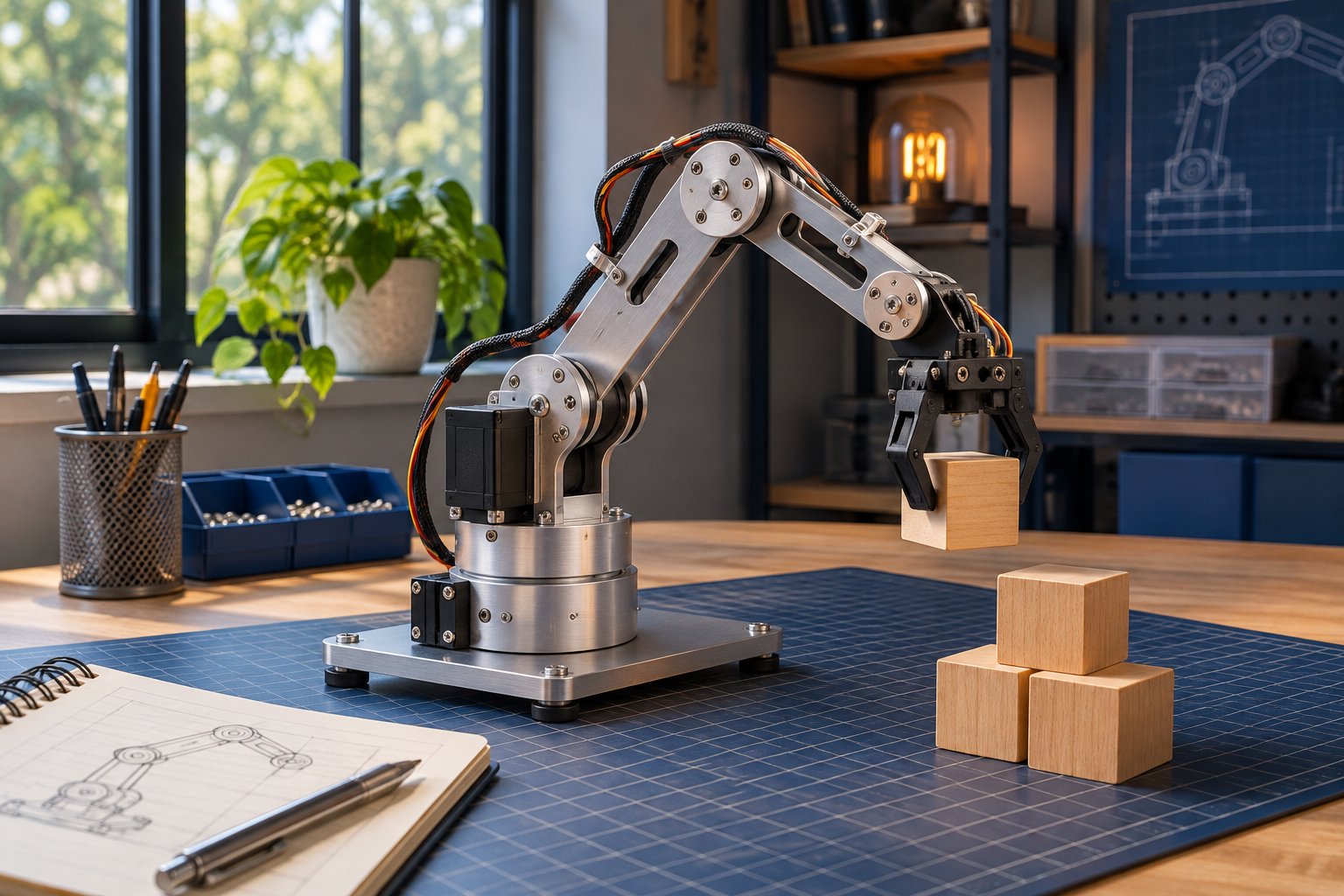
Treat the mechanism, the instructions and the observation as separate parts of the project. If the result changes, record which part you adjusted. Changing several things at once may produce a better demonstration, but it makes the lesson harder to explain later.
A useful project notebook contains more than successful photographs. Include awkward attempts, short descriptions of what happened and the next question to test. The aim of a first prototype is to make an idea inspectable. A clear, repeatable task is a stronger starting point than an impressive list of features.