A working sketch does not have to be polished to be useful. Its first job is to show a relationship that words leave ambiguous: how two parts meet, where an object moves or which surface someone is describing. Clarity matters more than presentation.
Begin with the overall arrangement and label the important features. Add another view when a single drawing hides something essential. Keep dimensions, units and assumptions legible, and avoid implying precision that the sketch has not established.
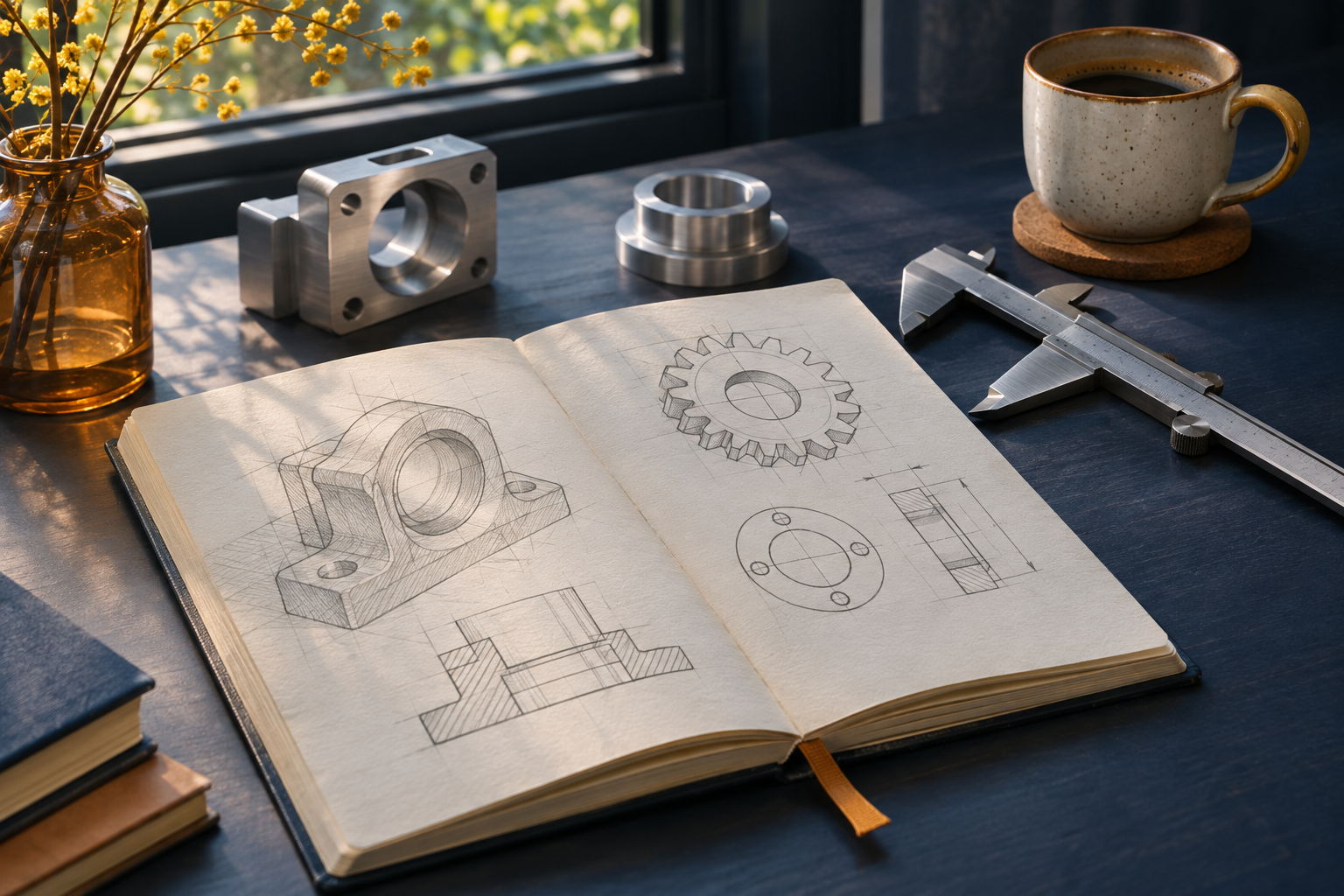
Use annotations to distinguish existing features from proposed changes. A short note explaining the purpose of a line can prevent a later reader from mistaking an idea for a requirement. If a measurement has not been checked, mark it as provisional.
Keep dated versions rather than repeatedly drawing over the only copy. Comparing them makes the reasoning behind a change visible. A sketch is a conversation tool and a record of thought; it is not automatically a production drawing or proof that a design will perform as intended. Its usefulness begins with making the next question easier to ask.