A component notebook is most useful when it records why a part matters to the project. A list of names alone may not explain the decision that brought an item onto the bench. Add enough context for a future reader, including your future self, to reconstruct that choice.
Begin each entry with the exact identifier printed on the part or its packaging. Keep a link or reference to the original manufacturer documentation, and distinguish confirmed details from assumptions. Leave unknown fields open rather than filling them with an educated guess.
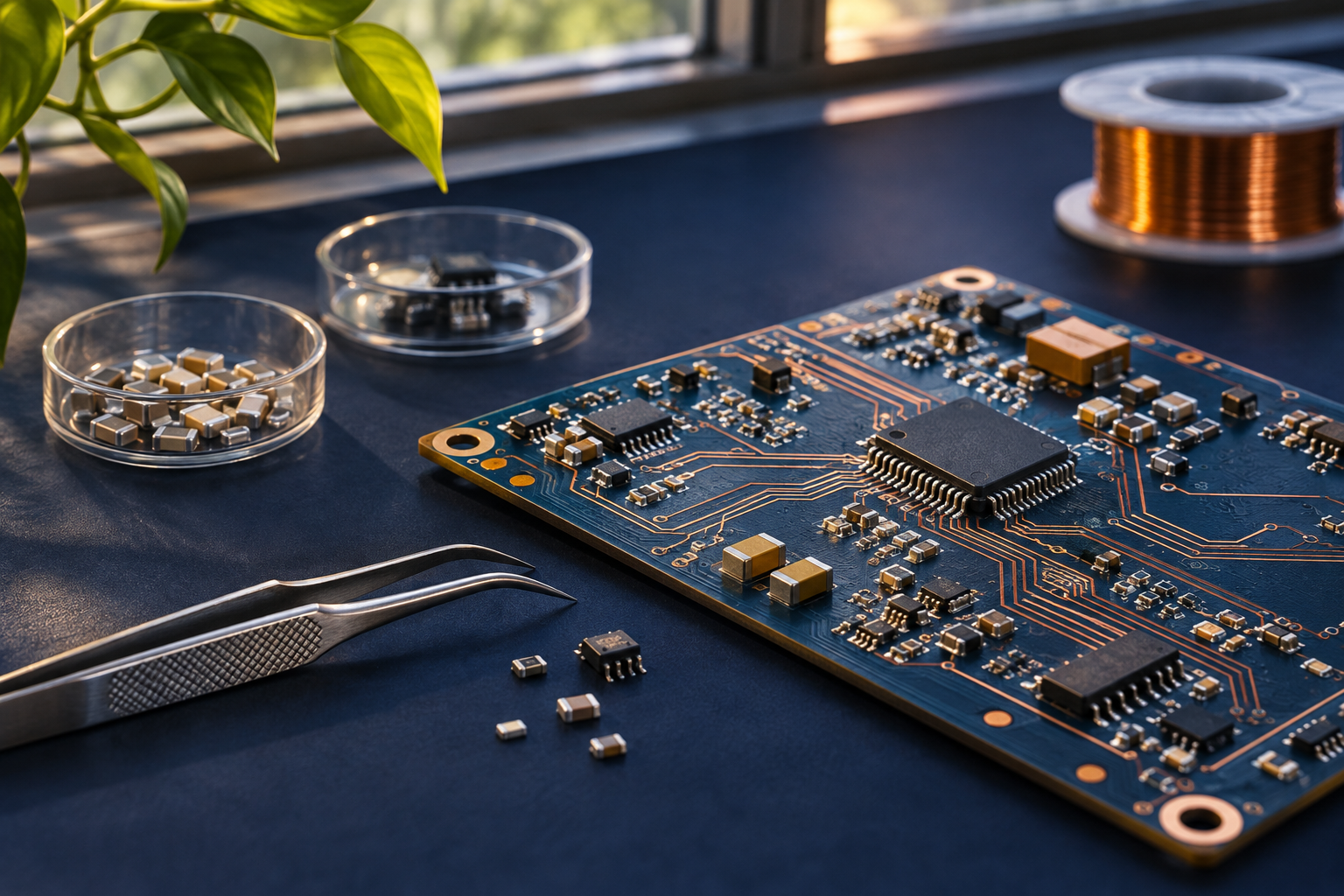
Use a consistent structure: identity, intended role, source of information and questions still unresolved. A photograph can help connect the note to the physical object. Avoid turning the notebook into a collection of copied tables that no longer show where the information came from.
Finish by explaining the next decision this information supports. Perhaps the part needs further identification, comparison with an alternative or review by someone more experienced. Good notes preserve the reasoning around a project. Their value comes from traceability and clarity, rather than from how many technical terms fit on a page.