
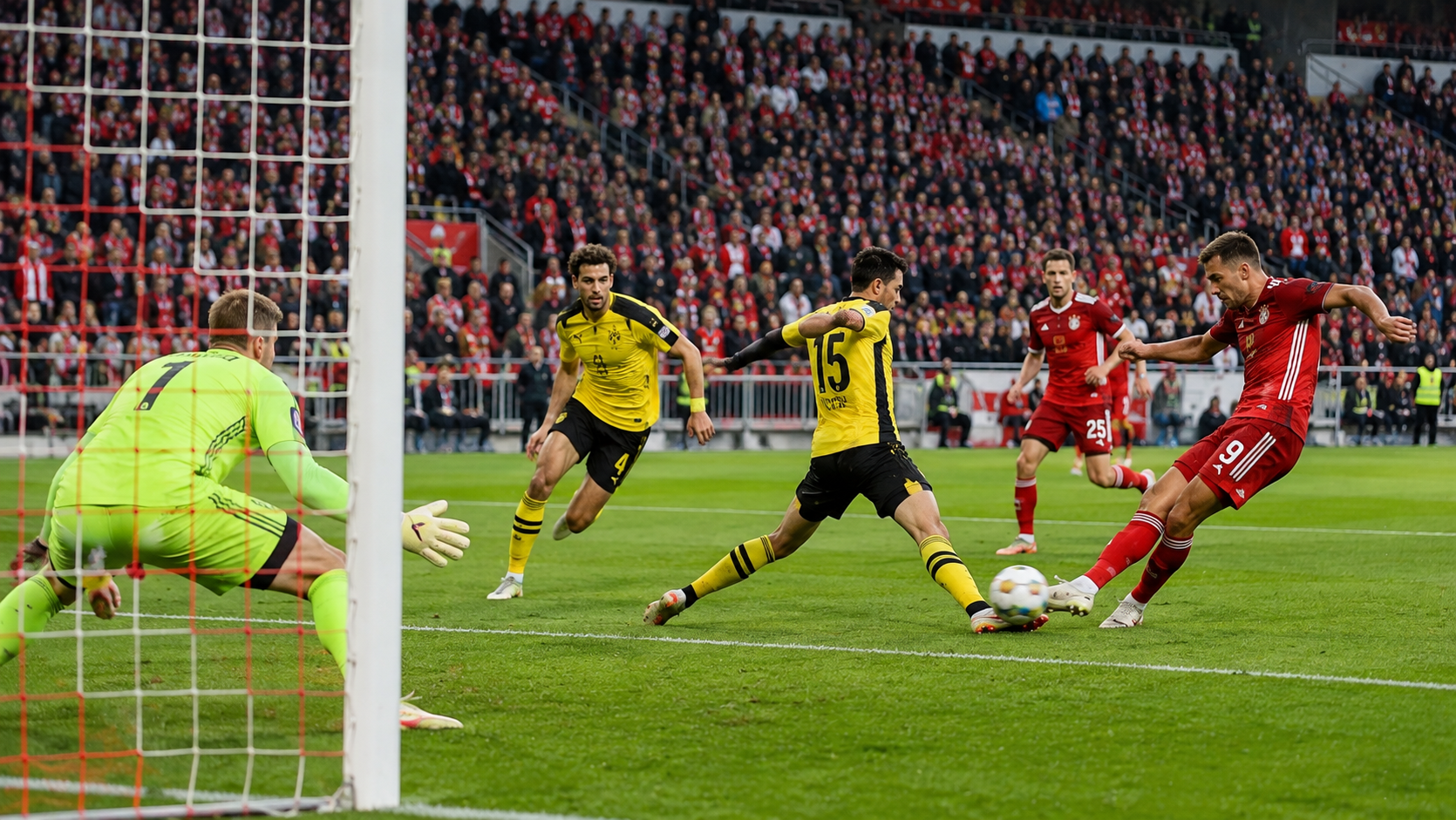
German football is often associated with speed, attacking ambition and energetic stadiums. Yet the real character of a Bundesliga match cannot always be understood through its goals or most spectacular moments. A successful performance may depend on a midfielder’s ability to control the rhythm, a defender’s decision to step forward at exactly the right moment or a forward whose movement creates an opportunity for someone else. Choosing to watch Bundesliga full matches gives supporters the chance to follow these details and appreciate the complete story behind every result.
The Bundesliga has developed a distinctive place in European football. Its reputation is built on exciting attacking play, strong club identities, influential coaches and a culture in which supporters play an important role. The competition brings together established institutions and ambitious challengers, creating a sporting environment where familiar rivalries coexist with unexpected performances.
A complete match offers a perspective that short highlights cannot fully reproduce. It allows viewers to understand how a team prepares for an opponent, how its approach changes during difficult periods and why certain players become particularly important as the contest develops.
Understanding the Collective Work Behind Every Attack
An attacking move rarely belongs to one player alone. Even when a forward finishes with an impressive goal, the opportunity may have been created through several movements involving teammates who never touch the ball during the final action.
A winger might move towards the centre to draw a defender away from the touchline. A midfielder could recognise the opening and deliver a pass into the space behind the defensive line. Meanwhile, another attacker may deliberately occupy a central defender, making it more difficult for the opponent to respond.
These coordinated movements are an important part of modern football, and the Bundesliga provides plenty of examples of teams using them to create dangerous situations.
During a live broadcast, viewers naturally concentrate on the player carrying the ball. Watching the complete match again makes it easier to observe the wider structure. The camera may reveal how the attacking shape develops, which players create passing options and how the opposition attempts to close the available spaces.
This perspective changes the way successful attacks are understood. A goal becomes the final stage of a coordinated action rather than an isolated moment of individual brilliance.
It also demonstrates why teamwork remains essential even in a competition featuring technically exceptional players. Individual talent can produce something unexpected, but consistent attacking performance depends on players understanding one another’s movements.
The Importance of the First and Last Fifteen Minutes
The opening and closing stages of a football match often have a special significance. The first fifteen minutes can reveal how teams intend to approach the contest, while the final period frequently tests their concentration, physical condition and ability to manage pressure.
At the beginning of a match, teams are still assessing the opponent’s approach. Some start aggressively, attempting to establish control through pressing and possession. Others prefer a more cautious opening, allowing the opposition to reveal its intentions before committing additional players forward.
The first few attacks can provide clues about the tactical plan. A team may repeatedly target one side of the pitch, attempt to exploit space behind the defensive line or use short combinations to draw opponents out of position.
The final fifteen minutes present a different challenge. Players may become tired, substitutions can change the attacking balance and teams must decide whether to protect the current result or pursue another goal.
These periods are particularly interesting when viewed in their full context. A late goal may appear sudden in a highlights package, but the complete match can reveal several minutes of growing pressure, tactical adjustments and defensive difficulties that preceded it.
The same applies to a team that successfully protects a narrow advantage. Its final defensive effort may be the result of decisions made much earlier in the contest.
Goalkeepers: The Specialists Who Can Change Everything
Goalkeepers occupy a unique position in football. Their performances are often judged through saves and mistakes, but their influence extends far beyond the moments when they touch the ball.
Modern goalkeepers are expected to contribute to the organisation of the defence, communicate with teammates and participate in the team’s build-up play. Their positioning can determine whether an opponent finds space behind the defensive line, while their distribution can help initiate an attack.
The Bundesliga has featured many goalkeepers known for different strengths. Some are particularly effective at reacting to close-range attempts, while others are valued for their command of the penalty area or ability to play accurate passes under pressure.
A full match makes these qualities easier to appreciate. Viewers can observe how a goalkeeper adjusts their position when the ball moves across the pitch, whether they communicate with defenders and how confidently they respond to crosses and through balls.
There is also an important psychological dimension. A goalkeeper who makes an early mistake must recover concentration quickly. A difficult save late in the match can give teammates renewed confidence, while a poorly timed decision may create uncertainty throughout the defensive line.
These contributions are not always fully represented in short summaries. Following the entire match provides a more balanced understanding of the position and its influence on the final result.
How Young Players Learn to Handle the Bundesliga
The development of young footballers is one of the most interesting ongoing stories in German football. The Bundesliga has a history of providing opportunities for emerging talents, allowing them to compete against experienced professionals and gradually establish themselves at the highest level.
However, the transition from youth football to senior competition involves challenges that are not always immediately visible. Young players must adapt to faster decision-making, stronger physical opponents and the pressure of performing in front of large crowds.
Technical ability is only one part of the process. A promising winger must learn when to take on a defender and when to release the ball. A young midfielder needs to recognise danger before it develops, while a defender must understand how to maintain concentration even when the team spends long periods without possession.
Watching a complete match can reveal these stages of development. Instead of concentrating exclusively on a player’s successful actions, supporters can observe how they respond to mistakes, whether they remain involved after a difficult challenge and how their confidence changes during the contest.
These details help explain why development requires experience. A player may show exceptional potential in one moment but still need time to become consistent across an entire match.
For supporters, following this progress can become one of the most rewarding aspects of a Bundesliga season. A footballer who initially appears as an exciting prospect may gradually become an important part of the team’s identity.
The Role of Coaches When a Match Refuses to Follow the Plan
A manager’s work does not end when the starting lineup is announced. Football is unpredictable, and even the most carefully prepared strategy can be disrupted by an early goal, an injury or an unexpected tactical decision from the opponent.
Coaches must constantly evaluate what is happening. If the midfield is losing control, they may introduce another player in the central area. If the opposition begins attacking through the wings, the defensive structure may need to change. A team chasing a result may move additional players forward, accepting the risk of leaving more space behind.
These decisions can transform the rhythm of a match. A substitution may provide fresh energy, but it can also change the relationships between players. A formation adjustment may solve one problem while creating another.
The Bundesliga’s energetic style makes these moments particularly interesting. Teams that rely on pressing and quick transitions must manage their physical resources carefully. If the intensity drops, opponents may find opportunities to escape pressure and move into dangerous areas.
A complete match gives viewers the opportunity to follow these developments rather than judging a manager’s decisions only by the final score. It becomes easier to understand the problems that prompted an adjustment and whether the chosen response worked.
More Than Bayern: The Competitive Personality of the Bundesliga
Bayern Munich has been a major force in German football, but the identity of the Bundesliga is shaped by many clubs with different histories and ambitions.
Borussia Dortmund is known for its passionate support and commitment to exciting attacking football. Bayer Leverkusen has developed a distinctive sporting identity through technical quality and collective organisation. RB Leipzig has introduced another approach, placing emphasis on intensity, player development and modern recruitment strategies.
Other clubs contribute equally important elements to the competition. Stuttgart, Eintracht Frankfurt, Freiburg, Mainz and Werder Bremen have all built their own traditions and relationships with supporters. Their performances help make the league more varied than a simple contest between its most successful institutions.
This diversity becomes especially visible when watching complete matches. A team with fewer resources may compensate through disciplined organisation and strong collective commitment. Another may rely on young players who bring energy and unpredictability. A club with a more experienced squad might approach difficult away fixtures with greater caution.
These different approaches create interesting encounters throughout the season. Supporters who follow only the biggest fixtures can miss some of the most compelling performances taking place elsewhere in the competition.
The Emotional Connection Between Clubs and Their Supporters
German football has a particularly strong matchday culture. Stadiums are often filled with supporters whose connection to their clubs extends across generations. The atmosphere is shaped by familiar songs, colours, banners and rituals that make each ground recognisable.
This connection can influence the emotional character of a match. Home supporters may encourage their team after conceding an early goal, creating an atmosphere that helps players maintain their confidence. During a difficult final period, the crowd can become an important source of energy.
Rivalries add another dimension. Fixtures involving clubs with long-standing regional or sporting connections often carry meaning beyond the immediate league position. The players understand the importance of the occasion, while supporters bring memories of previous meetings into the stadium.
A complete match allows viewers to experience more of this atmosphere. It captures the changing reactions of the crowd, the tension surrounding important decisions and the celebrations that follow decisive moments.
For those who appreciate football as part of a wider culture, these details are just as important as the action on the pitch. They help explain why a club can remain central to its community even when its results fluctuate.
Why the Complete Match Changes the Viewing Experience
Short highlights are convenient and often provide everything a viewer needs to understand the main incidents of a fixture. However, they are designed to select moments rather than preserve the entire sporting experience.
A full match includes the passages that do not always attract immediate attention: a team adjusting its defensive line, a midfielder slowing the tempo, a goalkeeper organising teammates or an opponent gradually losing control of the central areas.
These details provide context for the goals and major incidents. They also allow viewers to form their own opinions instead of relying exclusively on the moments selected by a highlights editor.
There is a difference between full-match recordings and extended highlights as well. Extended packages may include more attacks and important passages than a short summary, but they still omit parts of the original contest. A complete recording preserves the sequence of events from the opening whistle to the final moments.
This format is useful for different audiences. Casual supporters can revisit a fixture they missed, while more dedicated viewers can examine tactical decisions, compare individual performances or follow the progress of a particular player.
The additional time also makes it possible to appreciate the rhythm of football. Not every moment needs to produce an opportunity. Sometimes the most revealing part of a match is the patient build-up before a team finally finds a way through.
A Competition That Rewards Attention to Detail
The Bundesliga offers a combination of attacking energy, tactical organisation, emerging talent and passionate supporter culture. Its matches can be spectacular, but their lasting appeal comes from the details that connect individual moments into a complete sporting story.
Watching an entire contest reveals how teams cooperate, how players respond to difficult situations and how coaches attempt to influence events. It also preserves the atmosphere of the stadium and the emotional reactions that make football meaningful to its supporters.
The most memorable moments may be decided in a matter of seconds, but they rarely happen without a wider sequence of decisions and movements. Returning to the complete match makes those connections visible and gives every goal, save and dramatic finish a deeper meaning.
For anyone interested in German football, the final score is only the beginning of the story. The real character of the Bundesliga is found in everything that happens before, between and after its defining moments.